
Why You Need an Investment Plan
Investing without a clear plan is like setting off on a road trip without a map you might get lucky and find your way, but more often than not, you will end up lost or making detours that waste time and money. A solid investment plan gives you a roadmap for your financial future and helps you make informed decisions based on your goals.
Did you know that inflation could quietly eat away your savings if you do not invest wisely? By creating an investment plan, you’re not just beating inflation you’re also safeguarding your future against any unforeseen financial bumps. Trust me, a little planning now can save you a lot of headaches later.
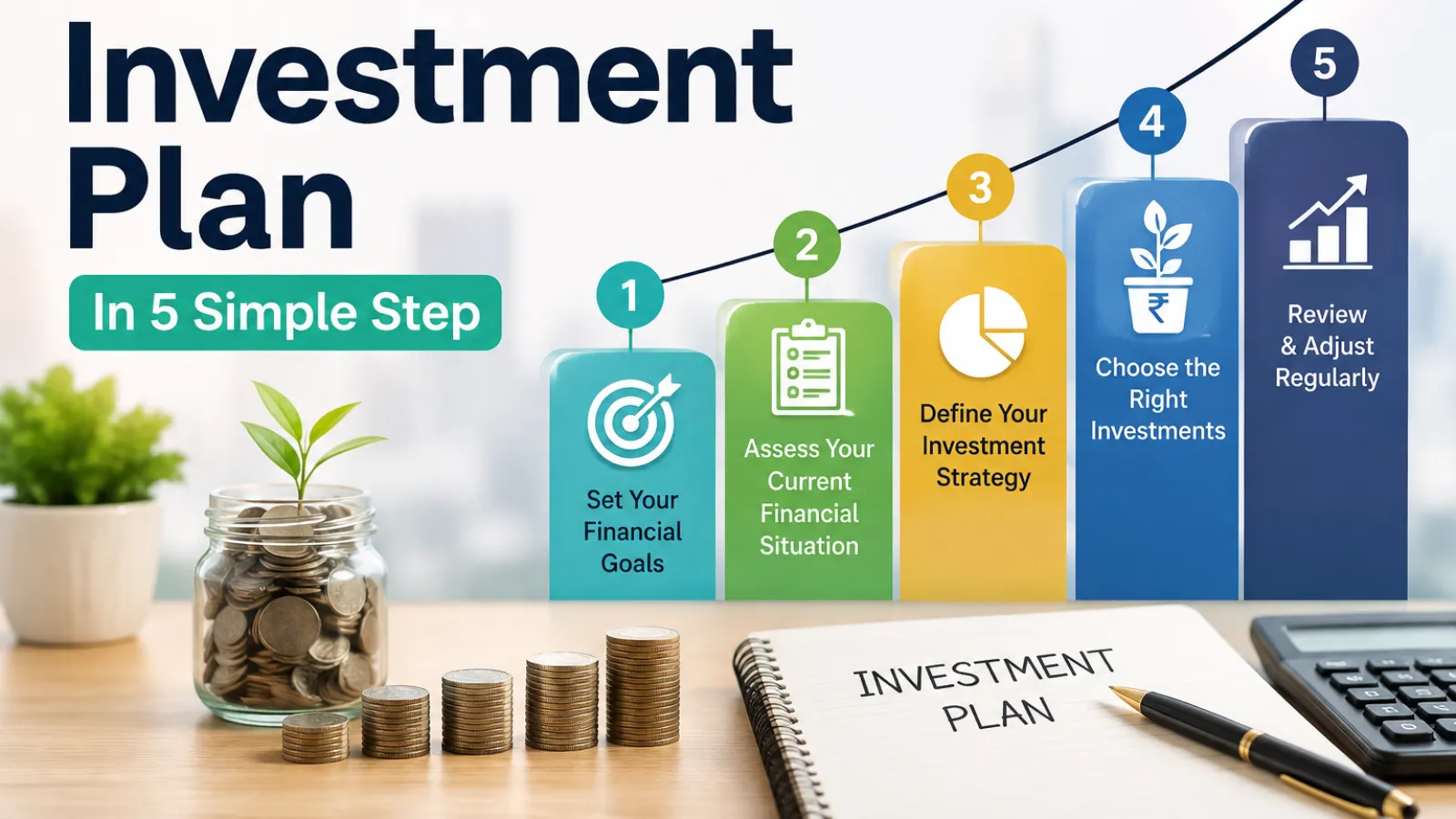
1.Set Clear Financial Goals for Your Investment Plan
Before diving into any investments, you must first set clear and measurable financial goals. Think of it like setting a destination on your GPS before starting a long drive. Without clear goals, how do you know which path to take?
Use the SMART framework to set your goals Specific, Measurable, Achievable, Relevant, and Time-bound. For example, instead of saying, “I want to save for retirement,” be specific: “I want to save ₹10,00,000 for retirement by the time I turn 60.” This makes it easier to break your plan into actionable steps.
Examples of Financial Goals:
- Short-Term: Saving ₹1,00,000 for a vacation or a new car within 1-2 years.
- Medium-Term: Saving ₹10,00,000 for a home down payment in the next 5-7 years.
- Long-Term: Building ₹50,00,000 for retirement in 25 years.
2. Understand Investment Options
It’s important to know where you are putting your money and what type of returns you can expect. The world of investing can be overwhelming at first, but once you understand the options available, it becomes much easier to build a plan that suits you.
Popular Investment Types:
- Stocks: When you buy stocks, you own a share of a company. Stocks can offer high growth but come with higher risk. For example, the stock of a tech company like Infosys might skyrocket, but it could also take a hit if the market tanks.
- Bonds: These are loans you make to the government or corporations, and they pay you interest. Bonds are generally safer, but the returns are lower.
- Mutual Funds: These are collections of stocks, bonds, or other assets pooled together. They help diversify your investments, reducing risk.
- ETFs: Exchange-Traded Funds are like mutual funds but trade like individual stocks. They are a good option if you want a low-cost way to diversify.
- Real Estate: Investing in property provides long-term growth and rental income but requires a larger capital outlay and less liquidity.
When I started saving for retirement, I decided to go with a combination of stocks and real estate. While stocks offered me the potential for growth, real estate provided stability.
You may also Like : Best Investment Strategies for Your Financial Goals 2026
3.Assess Your Risk Tolerance
Risk tolerance is all about how much uncertainty and loss you can comfortably handle. The level of risk you’re willing to take will guide your investment choices.
How to Assess Your Risk Tolerance:
- Low Risk: If you’re risk-averse, you may prefer safe options like bonds or fixed deposits, which are less volatile.
- Moderate Risk: A balanced approach works for those willing to take some risks. A mix of stocks and bonds can offer moderate returns with some fluctuations.
- High Risk: If you’re young and have a long time horizon, you might opt for stocks or real estate. These offer high returns but come with the potential for significant dips.
Personal Insight:
I started investing heavily in stocks in my 20s because I had plenty of time to ride out market swings. Now, as I’m nearing retirement, I have shifted to safer investments like bonds and real estate for more stability.
4.Diversify Your Portfolio
“Don’t put all your eggs in one basket.” Diversification helps spread your investments across different asset classes and sectors, which reduces risk.
Why Diversification Matters:
- Reduces Risk: If one sector (e.g., tech) does poorly, another sector (e.g., healthcare or real estate) might do better.
- Balancing Losses and Gains: By diversifying, you ensure that some investments will perform well even if others aren’t.
- Steady Returns: Diversified portfolios generally provide more consistent returns over time.
How to Diversify:
- Mix stocks, bonds, mutual funds, ETFs, and real estate across different sectors (tech, healthcare, real estate, etc.).
- Use index funds or ETFs for automatic diversification.
- Avoid over-concentration in any one asset or sector.
Example:
If you invest ₹10,00,000, your diversified portfolio could look like this:
- ₹4,00,000 in stocks
- ₹3,00,000 in bonds
- ₹2,00,000 in mutual funds
- ₹1,00,000 in real estate or ETFs
5.Monitor Your Investments Regularly
Your investment plan won’t work if you forget about it. Checking in on your portfolio regularly helps you stay on track and make adjustments as needed.
Tips for Monitoring:
- Quarterly Reviews: Don’t check your portfolio every day. The market fluctuates, but looking at it every few months will help you focus on the long-term trend.
- Rebalance: If a certain investment grows too large, rebalance your portfolio to keep it aligned with your goals.
- Use Tools: Platforms like Zerodha, Groww, or Upstox make it easy to track your investments.
Mistakes to Avoid When Creating Your Investment Plan
Here are a few common mistakes many investors make:
- Overtrading: Buying and selling too often can lead to high fees and taxes. Stick to your long-term strategy.
- Chasing Hot Tips: Don’t make decisions based on rumors or tips from friends. Always research and make informed choices.
- Neglecting to Diversify: Putting all your money into one asset or sector can be dangerous if that market crashes.
Personal Mistake:
I once put a large chunk of my money into a hot stock tip, only to watch it lose value. Since then, I have learned to do my research before making any investment decisions.
How to Get Started: Quick Tips for Beginners of Investment Plan
- Start Small: Begin with an amount you’re comfortable investing, and gradually increase it as you become more confident.
- Automate Your Investments: Set up Systematic Investment Plans (SIPs) to invest regularly, even when the market is volatile.
- Look for Low-Cost Options: Index funds and ETFs are great for beginners as they have low fees and provide broad market exposure.
Final Thoughts
Creating an investment plan doesn’t have to be overwhelming. By setting clear goals, understanding your options, diversifying, and monitoring regularly, you can steadily build your wealth. Remember, investing is a marathon, not a sprint. Start small, stay informed, and most importantly, stay patient. Your financial future depends on it.
Disclaimer: The information provided in this article is for educational purposes only and should not be considered as financial advice. Always conduct your own research or consult with a qualified financial advisor before making any investment decisions.